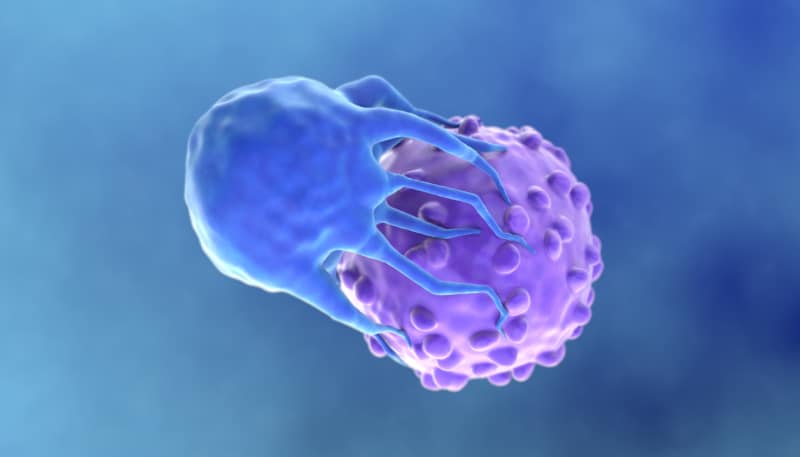
Trials can also enable studying earlier use of CAR T-cell therapy and provide an avenue to potentially access more effective and less toxic next-generation products.
Importantly, they allow innovation to progress within tightly governed protocols that prioritise patient safety while accelerating system-wide learning.
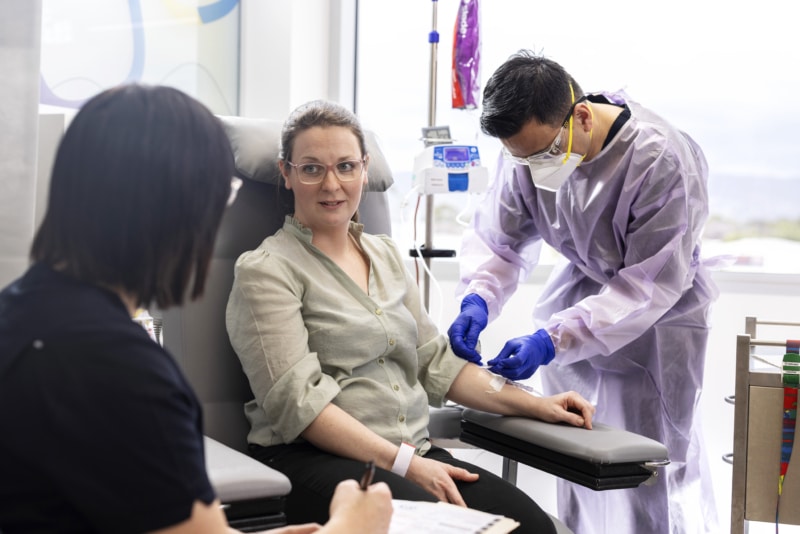
At Icon Cancer Centre South Brisbane, we have recently activated a clinical trial using an innovative allogeneic CAR T-cell for the treatment of specific types of lymphoma. Here, immune T-cells are derived from healthy donors rather than the patient which means that treatment can be given more quickly and, in many cases, safely delivered in an outpatient setting.
The trial also incorporates an ultra-sensitive blood test, which is much more sensitive than routine imaging after initial therapy. The test helps doctors determine if there is any residual lymphoma, and thereby predicts which patients are at risk of future relapse.
Patients who test positive with this blood test can be treated with allogeneic CAR T-cells and are intervened at a much earlier stage – immediately after frontline therapy and before their disease relapses.
Early interim results from participating centres overseas are encouraging, suggesting early indications of positive patient outcomes. As an international, randomised study involving multiple centres, a successful outcome could lead to broader approval of this therapy and significantly change how CAR T-cell treatment is delivered in the future.